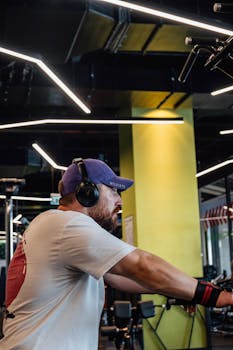
Snapping your fingers at just the right moment can change everything in sports or games. The secret link is audio cues, and they shape the way you react in milliseconds.
Competitive environments reward fast, precise responses. From high-speed gaming to quick pivots during exercise, audio cues are built into these moments for enhancement—timing decisions and sharpening instincts.
By exploring the science and practical uses of audio cues, this article breaks down exactly how they influence reaction time so you can use these insights for your own performance gains.
Hearing the Seconds: Training Your Brain to React Faster
You will discover a straightforward process to condition your reflexes using targeted audio cues that speed up how quickly you respond, even in high-pressure settings.
Improved reaction time often relies less on sheer reflex and more on learning to spot, interpret, and act on purposeful audio cues present in your environment.
Pairing Sound With Action in Practice Drills
Professional athletes frequently train with sudden whistles, buzzers, or clapping. For example, a coach shouts “now!” Players instantly jump, pass, or sprint—responding to audio cues seamlessly.
Gamers execute combos by waiting for a unique in-game ping. As soon as the cue rings, they hit a specific key sequence, showing how audio cues can streamline input precision.
This routine links auditory recognition to a repeatable movement. You can try it too: use a timer app’s chime during exercise to practice rapid direction changes based on sound alone.
Immediate Feedback From Environmental Sounds
Imagine running when the starter pistol cracks. That sharp sound triggers a launch—no visual needed. Players in team sports memorize pass or attack cues like a teammate’s call.
People react faster to a honking horn while crossing a busy street than to a flashing light, given audio cues reach processing centers in the brain more directly and rapidly.
Replicating this, try using a random sound generator during practice tasks. Take immediate action every time you hear the signal and measure if response time improves over sessions.
| Audio Cue | Context | Intended Player Action | Quick Takeaway |
|---|---|---|---|
| Beep | Jump start in track events | Sprint instantly off line | Set audio to override visual hesitation |
| Chime | Mobile games targets | Tap at exact sound for rewards | Practice precise tap timing with earphones |
| Whistle | Basketball play shifts | Switch lanes or positions | Identify which whistle belongs to what cue |
| Ping | Racing video games | Shift gears at the ping | Build habit for audio cue before each move |
| Snap | Reflex testing workouts | Change exercise or direction | Enlist a partner to randomize audio cues |
Programming Rapid Decisions With Layered Audio Cues
Adding more complex or layered audio cues into your routine can train your mind to quickly choose between actions, rather than pausing to process every step.
Layered cues—where different sounds signal distinct commands—allow you to practice selecting responses from a wider menu, mirroring advanced real-world scenario demands.
Branching Responses With Dual-Channel Audio
Using left and right headphone cues, gamers train to move or defend based on a sound’s direction. This creates instinctual, split-second directional choices.
If a low beep = duck and a high beep = jump, you respond instantly according to the frequency. Try a soundboard app to script these during at-home drills for increased versatility.
- Assign unique sounds to specific actions: Keeps brain sharp and minimizes confusion, especially under stress, when multiple actions exist.
- Alternate cues in rapid succession: Challenges you to shift responses on demand, which simulates unpredictable game or real-world scenarios.
- Introduce background noise: Trains focus on the correct audio cue while ignoring distractions—mirroring noisy sports arenas or online matches.
- Increase speed between cues: Forces you to process and select responses at a higher pace, translating directly into improved reaction times.
- Record and review progress: Playback helps spot mismatches between audio cues and reactions, guiding concrete improvements each session.
Layering complexity with audio cues transforms simple drills into genuine cognition and reflex workouts—adapting to new cues as easily as you respond to familiar ones.
Customizing Reaction Training for Different Skills
You might want to target different abilities, such as fast-twitch muscle responses or precise finger positioning. Vary audio cues to cover these specifics, not just general speed.
For example, in eSports, assign a low beep for weapon reload and a double-pop for dodge. You learn unique reactions for each. The process raises efficiency across skill sets.
- Set a timer for 60 seconds: Alternate between two audio cues. Tap left for one cue and right for another. Tally misclicks and aim to reduce errors.
- Record baseline reaction time: Use any phone app. Average your first ten tries so you can measure future progress with the same cues.
- Increase drill difficulty: Add more cues or speed up intervals. This strategy mimics rising challenge levels, ensuring adaptation rather than stagnation.
- Switch cue meanings partway: For five reps, beep means jump. Suddenly, beep means duck; now jump is a bell. Switching builds mental flexibility under audio cues.
- Swap lead and support roles: In pair drills, one person delivers the audio cue, and the other reacts. Then, switch. Both perspectives reinforce acute listening and cue reliability.
Fine-tuning the variety of audio cues guarantees progress in more than simple reflex speed—fostering adaptable, layered skill sets for any real-world challenge.
Direct Engagement: Verbal Cues in Real-Time Scenarios
Deploying audio cues firsthand in practical settings lets you spot immediate, visible improvements. This process builds internal confidence by turning practice into tangible habits.
Game Day Strategy: “Move on Go!”
Imagine calling out “Go!” to a team, and players instantly run. They’ll respond faster after repeatedly training with this audio cue, because the sound triggers automatic action.
Consistently running the same drill with audio cues lets players form a subconscious connection to the command, turning reaction into an almost unthinking reflex in crunch time.
Your own drills might use a handclap, bell, or snap. Use a sharp, clear noise—like a whistle in sports—so everyone understands the exact start of movement, avoiding hesitation.
Repeated Verbal Signals During Refined Drills
In partner work, one player yells, “Up!” and the other must block, pass, or move. Audio cues keep the flow dynamic, requiring quick attention and adaptation with every prompt.
Some teams call specific plays, like “Red!” or “Blue!”, with each color linked to a preset move. This lets every member associate a precise plan with a brief verbal audio cue.
Real practice: set a phone timer for random voice messages. Each command means a different movement. Log what trips you up, and then repeat to boost automatic response to audio cues.
Preparing for Distractions: Filtering Signals From Noise
You can dramatically improve reaction time by learning to pick out relevant audio cues within noisy, distracting environments, similar to what happens during crowded matches or events.
People using headphones during training often face a jumble of background noises. Learning to focus only on target audio cues means you act precisely rather than becoming distracted.
Building Focus With Intentional Clutter
Add background sounds—crowd noise, music, wind—to routine reaction drills. Introduce audio cues intentionally, so you have to actively filter and execute the correct response.
Practicing with added sound chaos simulates real game days or urban traffic. The more you train attention on accurate audio cues, the more resilient your responses become in unpredictable settings.
Try running while music blasts and a training partner inserts unexpected bells or claps. Your focus on the authentic cue is what sharpens your split-second choices among distractions.
Resetting After Missed Cues
Missing an audio cue isn’t failure—it’s feedback. Build in brief pauses after a missed response, so you mentally reset and focus for the next cue rather than letting frustration linger.
Tracking missed audio cues on paper or an app helps spot patterns, such as losing concentration after long periods or repeated distractions. Adjust the drill intensity to challenge and build that focus.
Practicing recovery from missed audio cues, not just initial success, ensures you’re prepared to get back on track smoothly—even as your reaction time keeps getting faster overall.
Everyday Applications: Everyday Audio Cues Enhance Reaction in Life
Harnessing audio cues doesn’t stop with games or sports; these prompts can make everyday situations safer and more efficient, including driving, kitchen tasks, and public transit.
For example, a kitchen timer’s bell prompts you to act promptly, much like a bus or subway sound, ensuring you move at the right moments. These audio cues streamline decisions.
Audio Cues for Quick Safety Decisions
In traffic, a car horn or pedestrian crossing beep becomes your prompt to stop, go, or stay alert. You react instantly—audio cues here prevent accidents and add certainty to decisions.
Whenever you hear a low-battery alert, your reflex is to save files or plug in immediately. This habit—built by audio cues—translates directly into improved daily reaction speeds.
Train situational audio cue awareness by tuning into everyday bells, alarms, and signals. Respond right away, just like in practice sessions, cultivating faster, more reliable personal safety actions.
Boosting Reaction Time in Multitasking Moments
Cooking while listening for the oven’s buzzer, or acting on a phone’s ring while folding laundry, demonstrates multitasking powered by audio cues. Each signal nudges you to swap tasks promptly.
Pilots and surgeons use simultaneous audio cues for vital instructions, requiring focused, accurate responses in high-stakes environments. Their reliance on these cues highlights their real-world power for all of us.
Try setting three unique alerts for tasks over one hour. Respond right away—this practice builds your internal clock and hones overall reaction efficiency, mirrored in any context guided by audio cues.
Training Recommendations: Sharpen Your Reflexes Using Simple Audio Methods
Applying audio cue drills can be done anywhere, without specialist gear. Integrate these methods into your existing routine for steady gains in decision-making speed and movement accuracy.
Start with a simple process—use your phone to play random pings. Try quick taps, jumps, or mental math challenges each time a sound plays. Repetition forms the audio cue-reaction loop.
- Download a ringtone randomizer and set a timer. Each chime, take a new action—stand up, tap a key, clap your hands. Mixing cues trains flexibility in reacting under real-world audio diversity.
- Ask someone to surprise you with handclaps or whistles when distracted. Track which cues catch you off-guard to understand real-life lapses, and adjust your focus drills accordingly.
- During group workouts, have each person deliver one clear command or sound. Everyone must move together, building team awareness and reliability of reaction to group audio cues.
- Vary sound pitch for multiple actions. Assign high tones to jump and low to duck—predictable mapping speeds up learning new, layered reaction pathways efficiently over time.
- Mix in everyday sounds. Use a kitchen timer, alarm, or siren as practice signals. Swapping between familiar and novel audio cues builds robust, adaptable skills for any situation.
Continue raising the bar: increase cue frequency, add distractions, or swap meanings. This ensures your reaction time matches genuine complexity and speed required outside training.
Elevating Performance With Personalized Audio Cue Routines
Creating custom exercises with your own set of audio cues connects training directly to your personal goals, whether in sports, gaming, work, or everyday responsibility.
This approach means you work on weak spots or upcoming real-world scenarios. Choose specific sounds that trigger the unlikely, the awkward, or the challenging—then practice reacting quickly every time.
Fine-Tuning Audio Cue Speed and Clarity
Record cues at varying intervals, sometimes stacking them closely or stretching pauses. Test response accuracy. Adjust speed gradually upward only when you hit a high success rate.
If you misinterpret a cue, stop and replay the sound. Slow practice forms tight associations, making future split-second reactions to these audio cues nearly automatic under pressure.
Always ask yourself after a session: “Which cue still made me hesitate?” Build a bonus drill around that weak spot so you keep making progress every week, no matter your level.
Scenario-Based Audio Training for Targeted Outcomes
Picture an eSports match where three short pings mean shield, while one long buzz means attack—train accordingly. Cycle through these cues until your fingers move on command instinctively.
In driving, you might set up practice sessions where car horn sounds prompt quick braking, while a bell means safe to proceed. Switch sound meanings mid-drill to add adaptability.
Personalizing audio cues makes you more resilient in new settings. What surprises you now will soon become second nature as you expand your reflex repertoire to cover any challenge ahead.
Recapping Why Audio Cues Transform Reaction Speed
The right use of audio cues creates meaningful improvements in reaction time—combining science and practice for faster, safer, and more precise decisions across many activities.
From sports to daily life, these signals bridge training and reality, making instinctive responses reliable in unpredictable moments when timing and clarity truly matter the most.
Audio cues aren’t just background noise; they are performance tools you can adapt right now. Incorporate purposeful sound prompts to build sharper, more confident reactions in everything you do.


