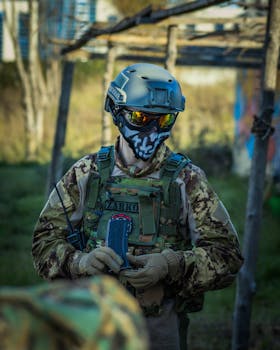
Landing a victory in complex games can feel thrilling, especially when you carefully manage every skirmish and flank. That focus on the details makes battlefield control so engaging.
Understanding battlefield control matters for players who want more agency and precision. It creates moments of surprise and real skill, shifting outcomes through foresight and adaption.
This article offers actionable strategies, micro-decisions, and practical tools for anyone ready to elevate how they approach battlefield control in their next digital or tabletop campaign.
Spotting enemy intent with battlefield control unlocks better win rates
Reading the field sharpens your awareness, letting you anticipate threats and reshape plans mid-match. This is the backbone of savvy battlefield control strategy in every session.
Successful players listen for audio cues, watch for formation shifts, and predict intentions from subtle moves. Those details practically whisper the next phase of battlefield control.
Pinpointing threat vectors on the map: Get tactical with visual cues
Picture each glowing tile as a hotspot. The moment the enemy shifts units there, say “They’re probing our northern flank.” This directs teammates and signals instant battlefield control awareness.
Noticing a narrow choke points can anchor squad defense. A player might say, “Set snipers here, keep eyes on midline” so field control stays in your hands, not the opponent’s.
When a heavy unit hesitates at terrain, call out “Expect artillery.” This concrete read allows teammates to reposition for stronger battlefield control, gaining ground with ready counters.
Matching enemy pacing with layered responses
When a fast rush appears, slow them down by placing obstacles or using timed abilities. One teammate’s quick reaction changes the pace, reclaiming battlefield control immediately.
If foes group for a push, split your forces. Announce, “We’re holding at two points, delay and regroup.” You’ve now seized the tempo and forced adaptation through battlefield control.
For a retreating enemy, send scouts on the flanks. Saying, “Hold the line but fan out” ensures no surprise return, further cementing your side’s battlefield control for the round.
| Signal | Player Action | Purpose | Takeaway |
|---|---|---|---|
| Clusters on minimap | Call for AoE attacks | Exploit grouped foes | Watch clusters to deploy area skills for maximum effect |
| Flank pressure | Reinforce with tank units | Prevent breaches | Block early advances to keep central ground safe |
| Heavy unit pause | Ready anti-armor counters | Preempt strong pushes | React quickly to immobile threats and coordinate a counterstrike |
| Retreat signals | Scout with light fast units | Track enemy movement | Follow retreat routes to gather intel and prepare ambushes |
| Spread-out approach | Stretch defenses evenly | Slow encirclement | Mirror enemy sprawl to deny easy inroads |
Deploying formations: Structure your line to gain battlefield control fast
Moving troops with purpose organizes chaos into an advantage. Using the right formation lets you claim space, direct pressure, and shape the enemy’s options—crucial for battlefield control.
Starting each round with deliberate lineups transforms the match’s momentum. You can force engagement where desired and resist surprise tactics, maintaining vital battlefield control every minute.
Setting up a strong frontline to draw enemy focus
Start with heavy or shielded units in front. This draws attacks and buys time for your support or damage dealers to maneuver into position without exposure.
If teammates worry about flanks, say “Hold tight, cover our sides with ranged units.” You’ll establish a habit of protecting your battlefield control anchor each phase.
- Place durable tanks at bottlenecks: They slow advances, making your hold on chokepoints stronger and extending defensive battlefield control.
- Move ranged units to high ground: Firing from above boosts line-of-sight, helping you suppress threats and reinforce battlefield control quickly.
- Assign fast scouts to watch weak areas: These spot threats early, giving your team warning to pivot and adjust their battlefield control tactics.
- Anchor artillery behind the line: Minimal movement means they keep firing with fewer interruptions, maximizing pressure and battlefield control throughout pushes.
- Use flexible midfielders for emergency fill-ins: When gaps appear, these units step in, ensuring battlefield control doesn’t collapse due to single-point failures.
Knowing these placement rules increases your control over every engagement, grounding your actions in successful battlefield control basics.
Rotating formations at the right moment for tactical gain
Switch rows the instant enemy air units appear, pulling anti-air to the edge and retreating vulnerable troops. Call out changes for synchronized, rapid adaptation in battlefield control moments.
After pushing back an enemy wave, slide reserve units to reinforce your weakest position. Keep everyone informed—say “Rotate reserves to east” for practical, shared battlefield control.
- Pivot to diamond formation when surrounded: Encircle vulnerable allies, restoring battlefield control through layered defense and slower collapse.
- Bunch archers when prepping a volley: Their combined shots break attacks, letting you swing momentum back to your favor.
- Stagger spearmen placement: Overlap spear range in tandem to block cavalry, sealing off fast breakthroughs and cementing battlefield control on key flanks.
- Move support units to the edge for buffs: When healing or boosting, keep their range wide for better coverage and sustained battlefield control during skirmishes.
- Break formation for rapid fallback: Sometimes, scattering is safer. Announce “Scatter, regroup later.” Survive for another shot at battlefield control next turn.
Practice these micro-adjustments by calling each one out as it happens, building teamwork and fluid battlefield control in every encounter.
Timing skill deployments to flip battles
Coordinating upgrades and one-off abilities can instantly tip a fight. Getting timing right means each player contributes toward strong battlefield control that becomes obvious on every replay.
When action heats up, cue skills aloud so teammates follow along. Precision syncing gives battlefield control a rhythm everyone recognizes and leverages.
Sequencing abilities for impact without overlap
When your teammate says, “Hold freeze until they group,” delaying your stun turns chaos into a controlled counter, maximizing battlefield control with perfect order and coverage.
Activate defensive barriers when enemy skills wind up, not after. Saying, “Shield now!” gives team members a timing anchor, synchronizing battlefield control across the squad.
Set reminders for skill cooldowns: Note “Seventy seconds to artillery” to plan small skirmishes, holding large pushes for moments of greatest battlefield control impact.
Chaining area-of-effect attacks for crowd management
Lead with a slow effect, like tar or freeze, to force enemies to clump. Follow instantly with an AoE strike—say, “Drop bombs now!”—for a clean battlefield control wipe.
If enemies scatter early, call out “Focus middle, ignore runners” to concentrate fire. Containing most of the opposition secures lasting battlefield control for your group.
Encourage chain timing by setting up scripts: First player roots, second player blasts, third mops up. Repeat this rhythm for consistent battlefield control gains.
Directing communication channels keeps everyone synced for peak battlefield control
Staying united depends on direct communication. Clear calls and visual markers prevent chaos, ensuring battlefield control shifts in your favor through shared intent and efficient reactions.
When each player knows where to look or move, wasted steps disappear. That streamlining builds a reliable battlefield control system in every match.
Setting up quick command scripts for any situation
Agree on phrases for classic maneuvers (“Rotate left,” “Push mid now”). The group saves time, increases accuracy, and reduces missteps that drain battlefield control focus.
Organize color-coded pings or drawing tools to highlight threats. When someone taps a red marker on the map, everyone recognizes it as “critical” for instant battlefield control response.
Practice weekly scenario reviews: Review 60-second clips and discuss what phrase or action would change the outcome. Refining this loop cements groupwide battlefield control instincts fast.
Pivoting strategy after setbacks: Snap back battlefield control on the next exchange
Adapting after a tough loss keeps your goals in reach. Turning disaster into a regrouped effort means battlefield control doesn’t slip away for good.
As soon as the team suffers a reversal, identify what worked for the opposition. Translate specifics into new approaches for the next phase of battlefield control.
Anchoring regroup points on the field
Pick a landmark (“meet behind rock outcropping”) for safe assembles. Announce it aloud, making battlefield control a process of returning to stable ground and readying the next counterstrike.
Set defensive units at that landmark, stalling hot pursuit. This steadies momentum after a wipe, giving your squad a battlefield control baseline for the next attempt.
Give clear timing cues: “Retreat in five, reform in ten.” This instruction removes guesswork, keeping battlefield control grounded in fast, team-centered adjustment.
Shifting from rigid plans to adaptive tactics
Encourage quick huddles mid-match: “We need a surprise flank, not another frontal assault.” Trying unplanned moves refreshes battlefield control and frustrates the opposition.
Experiment with unexpected pairings (“pair scout with healer, stick right side”). These out-of-the-box ideas break stale rhythms, regaining momentum and opportunity for battlefield control.
Review setbacks constructively. Instead of blame, use lines like, “Let’s quiz what beat us,” reinforcing the learning mindset and evolving battlefield control skills for future games.
Keeping your nerve: Mental checklists for real-time battlefield control
Confidence and discipline shine through under pressure. Veteran players lean on specific mental lists, letting them maintain battlefield control even as situations spiral.
Consciously slow reactions using a “scan, decide, act” loop. It tempers panic, ensuring every battlefield control decision is grounded rather than frantic.
- Scan the minimap every ten seconds: This habit keeps positioning fresh in your mind, so you optimize battlefield control on-the-fly during each play session.
- Repeat priorities before big moves: Silently name main threats and targets, removing uncertainty and sharpening every battlefield control choice under stress.
- Check cooldowns while repositioning: Glancing at ability bars mid-move helps pace attacks and times battlefield control shifts for maximum pressure.
- Link current actions to broader goals: Saying “This push earns us vision,” ties the moment to longer-term battlefield control, reinforcing clarity in the heat of battle.
- Breathe and reset if overwhelmed: Exhaling fully slows your heart, resets focus, and allows you to tackle battlefield control with renewed intent after mistakes.
Actively reflecting on matches cements better battlefield control for next time
Intentional review sessions transform fleeting play into lasting learning. Noting what went right or wrong in battlefield control lets you build habits that stick for future rounds.
Players grow by setting aside judgment. Instead, describe, assess, and revise tactics honestly to ground better battlefield control in everyday play.
Conducting productive post-match breakdowns
Focus on moves with direct impact. If a failed charge cost ground, say, “Let’s log charge timing.” This measurable focus shapes next session’s battlefield control improvement.
Replay clips at slow speed to catch micro-decisions missed in real time. Pause, discuss sequence, and suggest, “Try spacing pushes,” to refine your team’s battlefield control pattern.
End each breakdown with a single adjustment: “Next round, signal before skill-drop.” Committing to one tweak at a time grows repeatable, robust battlefield control methods.
Comparing theoretical and real-world outcomes
Map out what should’ve happened in advance. Saying, “This flank looked ideal, but…” sparks constructive debate to update battlefield control expectations for next matches.
Contrast expected timelines with actual actions. Missing a timing cue? Adjust practice drills to embed split-second battlefield control on future runs.
Regular comparison keeps strategies honest, rooting battlefield control progress in the reality of every hard-fought match.
Reflecting on battlefield control strategies strengthens every future game
Every successful maneuver, communication tweak, and regroup plan strengthens the habit of battlefield control. That ongoing iteration makes smarter, more confident players over time.
The process of internalizing battlefield control fundamentals fuels reliable improvement and deeper collaboration with teammates, creating ever-better moments of in-game mastery.
Embodying battlefield control transforms routine sessions into memorable matches where learning never stops and achievements always feel earned.


